Universal ATEX tablet enclosures: a more sustainable approach to Zone 2/22 deployments?
Announcements | Friday, 20th February Share
In many industrial environments, tablet deployment in Zone 2 and Zone 22 areas must balance hazardous area suitability with evolving commercial hardware lifecycles.
Tablets are now routinely used to support inspection rounds, maintenance reporting, asset integrity checks and digital documentation. When these activities take place in classified areas such as ATEX Zone 2 and Zone 22, the equipment selected must be suitable for the defined hazardous area.
Unlike office-based IT deployments, hazardous area tablet use introduces additional considerations. Certification applies to a defined assembly, and mechanical integrity of the enclosure system forms part of that suitability. At the same time, operational teams often expect the same flexibility and refresh cycles seen in conventional IT hardware.
Balancing hazardous area suitability with long-term deployment planning is therefore not simply a matter of selecting a compliant device. It requires consideration of how the tablet solution will be managed across its operational lifecycle.
How should we plan tablet deployment in Zone 2/22 areas to avoid repeated hardware replacement?

In Zone 2 and Zone 22 environments, tablet deployment is governed by suitability of the certified assembly rather than the tablet alone. The enclosure system, mechanical sealing and approved configuration together determine whether the device can be used within the classified area.
Certification typically applies to a defined configuration as a mechanical system. This may include the housing, seals, fastenings and the way the device is restrained within the enclosure. If the tablet model changes, dimensions, mounting geometry or internal clearances can change as well. For that reason, compatibility should be confirmed against approved configurations rather than assumed.
In many organisations, tablet models evolve every few years. Hardware specifications change, form factors shift, and manufacturers discontinue previous generations. While this is normal within conventional IT environments, hazardous area deployments benefit from greater continuity in how certified equipment is managed.
Where enclosure systems are closely linked to a single tablet model, hardware refresh can require broader replacement of the certified assembly. This is not a regulatory failure, but it may introduce additional procurement cost, documentation updates and deployment disruption.
When planning tablet use in hazardous areas, specification often begins with the device rather than the deployment strategy. Teams may select a preferred tablet platform first and then identify an enclosure solution to make it suitable for Zone 2 and Zone 22 use.
This approach can work effectively in the short term. However, it may overlook how frequently commercial tablet models change. If the enclosure is certified specifically for a single device generation, future hardware refresh can require a reassessment of the assembly and, in some cases, replacement.
Another common oversight is assuming that device availability will remain stable for the lifetime of the hazardous area deployment. In practice, tablets are subject to ongoing model revisions. Minor dimensional changes between generations can prevent compatibility with existing certified housings.
Over time, this can lead to a mix of enclosure types across sites, reduced standardisation and increased inventory complexity. While not technically incorrect, it can complicate long-term maintenance planning and asset management.
Technology overview: modular enclosure strategy
Certification scope and configuration control
One approach to managing lifecycle change is to separate the certified enclosure from the tablet model itself. Rather than treating the enclosure and device as a fixed pairing, some systems are designed as a reusable certified housing combined with a device-specific internal fitting. This maintains a consistent enclosure platform while ensuring the deployed assembly remains within an approved configuration.
What the modular inlay changes mechanically
In this configuration, the outer enclosure remains constant and is intended for use within defined hazardous area zones. The tablet is mechanically restrained within a removable internal inlay designed to match specific device dimensions and fixing geometry. If the tablet generation changes, the internal fitting can be replaced with an approved inlay designed for the new model, while the outer enclosure remains in service.
Lifecycle planning without overstating capability
This modular approach does not remove the need for correct specification. Compatibility, certification scope and installation instructions must always be verified against the approved configuration before deployment in a classified area. However, it can provide a more structured way to align hazardous area tablet deployment with evolving commercial hardware lifecycles.
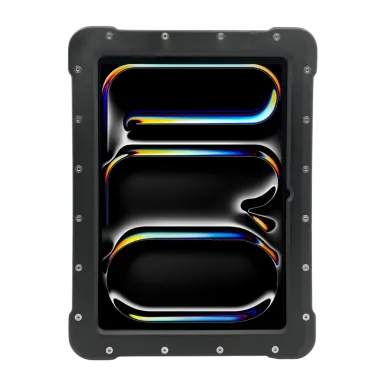
The ARMADEX Ex UniCase ATEX / IECEx Universal Tablet Enclosure is an example of an enclosure platform designed around this principle for Zone 2 and Zone 22 applications, supporting different tablet models through interchangeable inlays (subject to approved configurations).
Tablet solutions for hazardous areas are available in several forms. These include dedicated intrinsically safe tablets as well as certified enclosure systems that allow selected commercial tablets to be used within defined zones.
Able supports a range of options within our broader Intrinsically Safe Tablets category, enabling organisations to evaluate whether a dedicated intrinsically safe device or an enclosure-based approach best suits their operational model.
Planning tablet deployment in hazardous areas benefits from early application review. Understanding zone classification, environmental conditions, expected device lifecycle and standardisation goals can influence whether a dedicated intrinsically safe tablet or a modular enclosure strategy is more appropriate.
Able works with maintenance, operations and procurement teams to review deployment requirements and assess suitability against approved hazardous area configurations before installation.
Frequently asked questions (FAQs)
If we change tablet models, does the enclosure need to be recertified?
Certification applies to the approved enclosure assembly and supported device configuration. If a tablet model changes, the enclosure system must be compatible with that specific device under an approved configuration.
In a modular enclosure platform, this may involve replacing the internal fitting with an approved inlay designed for the new tablet model, rather than replacing the entire enclosure. Compatibility and certification scope should always be confirmed against manufacturer documentation before deployment in a classified area.
If you are reviewing tablet deployment in Zone 2 and Zone 22 environments, considering enclosure strategy at specification stage can support long-term consistency.
Explore the enclosure platform: ARMADEX Ex UniCase ATEX / IECEx Universal Tablet Enclosure
Email: [email protected]
Telephone: +44 (0)1189 311 188

Share this with
X Facebook LinkedIn Email