
Understanding how Coriolis mass flow meters can be configured for system integration
Announcements | Tuesday, 24th March Share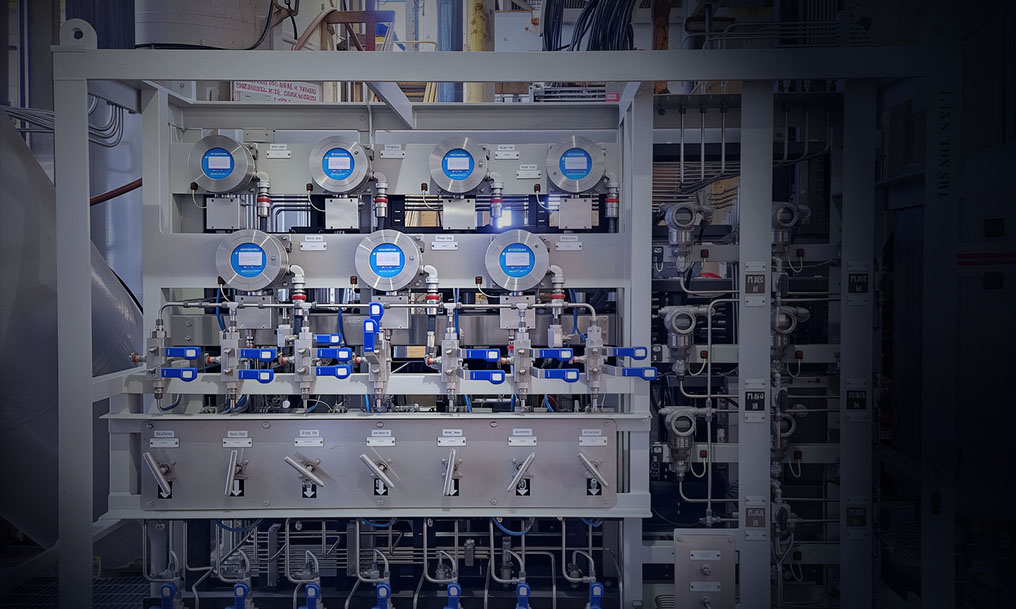
In many process environments, Coriolis mass flow meters are not selected in isolation, but as part of a wider measurement and control system where pipe size, pressure class, transmitter arrangement and communication requirements all need to align with the application.
Coriolis mass flow meters are widely used because they can provide true mass flow, density and temperature measurement within a single instrument. In practice, however, successful specification often depends on more than measurement performance alone. The meter also needs to fit the mechanical, electrical and control requirements of the wider system.
For engineers working on new installations, skids and retrofits, this can make configuration flexibility an important part of the selection process. If a meter cannot be matched to the required line size, pressure class, materials or output requirements, the surrounding system may need to be adapted instead.
Coriolis mass flow meters can often be configured to match line size, process conditions and control system requirements more closely, helping reduce compromise during system integration.
How can Coriolis mass flow meters be configured for system integration?
Matching the sensor to line size and process duty
Coriolis mass flow meters are available in a range of sizes to suit different flow rates and pipe diameters. Selecting a sensor that aligns with the process line size helps reduce unnecessary installation complexity and can minimise the need for reducers or other pipework changes.
System integration is not only a matter of physical fit. Flow characteristics, pressure drop expectations and operating conditions also need to be considered so that the selected configuration works within the wider process design rather than creating additional constraints elsewhere in the system.
Configuring pressure class and materials to suit the application
In many industrial environments, the selected meter must also align with the pressure class, temperature range and media compatibility required by the duty. Where those requirements are not properly matched, integration can become more difficult at both piping and specification stage.
A configurable Coriolis solution allows these requirements to be considered early, so the selected meter is better aligned with the mechanical and process conditions of the installation rather than forcing compromise later in the project.
Transmitter options and control system compatibility
Beyond the sensor itself, transmitter configuration is often central to successful system integration. Output signals, communications requirements and control system interfaces all need to be compatible with the plant architecture.
Industrial environments may require:
- Analogue outputs: For integration with established control and monitoring systems
- Digital communications: Where data exchange with modern plant systems is required
- Hazardous area suitability: Where the transmitter arrangement must align with the classified installation environment
When these requirements are considered during specification, the need for additional interface equipment or workaround solutions can often be reduced.
Mechanical integration within skids and packaged systems
In EPC projects and packaged process systems, Coriolis mass flow meters are often installed alongside valves, pressure instrumentation and control equipment within a defined footprint. In these applications, orientation, connection type and available space can all influence whether the selected meter integrates cleanly into the final design.
Configuration flexibility can help engineers account for:
- Installation orientation: To suit the intended pipe layout and operating arrangement
- Connection requirements: To align with existing pipe standards and project specifications
- Footprint limitations: To support integration within compact or pre-engineered systems
This can be particularly important where the meter forms part of a larger skid or packaged assembly and late design changes would be difficult or costly to accommodate.
Reducing compromise during system integration
Where a one-size-fits-all meter does not align with the application, the surrounding system often has to absorb the compromise. This may affect pipework design, controls integration, component selection or overall project efficiency.
By selecting a Coriolis mass flow meter that can be configured to suit the duty more closely, engineers can work toward a design that supports the process requirements from the outset rather than adapting the system around a fixed instrument format.
What this means for engineers
For many projects, correct Coriolis selection is not simply about choosing a meter with the right flow range. It also involves confirming that the selected sensor and transmitter arrangement can be integrated into the mechanical, electrical and controls environment of the wider system.
That makes configuration flexibility relevant not only to performance, but also to installation efficiency, project coordination and long-term maintainability.
Engineering review and application guidance
Selecting a Coriolis mass flow meter for integrated system use requires consideration of more than flow rate and line size. Pressure class, material compatibility, communication requirements and installation constraints all influence the final configuration.
In applications where process conditions are also demanding, understanding how those limits affect meter selection remains important. Further guidance on this topic can be found in our overview of pressure and temperature limits of Coriolis mass flow meters.
As the UK representative for Rheonik, Able supports engineers from early specification through commissioning and lifecycle support, helping ensure Coriolis meters are configured appropriately within the wider process system.
Frequently asked questions (FAQs)
Can Coriolis mass flow meters be configured to suit different line sizes?
Yes. Coriolis mass flow meters are available in different sizes to align with varying flow rates and pipe diameters. Selecting the correct size helps support cleaner mechanical integration and reduces the likelihood of unnecessary pipework modification.
Why does transmitter configuration matter in system integration?
Transmitter configuration affects how the meter communicates with the wider control system. Output type, communications requirements and installation environment all influence whether the meter can be integrated directly or whether additional interface measures may be needed.
Are configurable Coriolis meters useful in skid-mounted systems?
Yes. In skid and packaged system designs, space limitations, connection standards and installation orientation can all influence the suitability of the selected meter. A configurable solution can help align the instrument with the wider packaged assembly.
If you are reviewing Coriolis mass flow measurement for a skid, retrofit or complex process installation, Able can help assess configuration requirements before specification is finalised.
Explore the range: Coriolis mass flow meters
Email: [email protected]
Telephone: 01189 311 188

Share this with
X Facebook LinkedIn Email