
Science Museum Group
ABLE Awarded Orders | Tuesday, 28th July Share
Customer: Science Museum Group
Project: Mercury Hazard Monitoring
Location: Various sites, UK
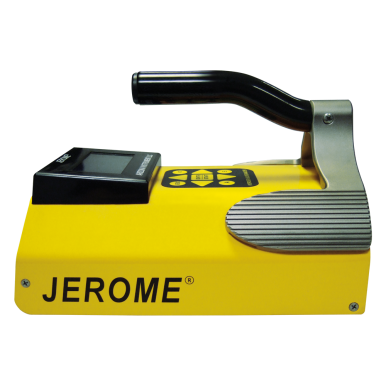
Products: Jerome J405 Mercury Vapour Analysers
The Science Museum Group has selected two Jerome J405 Mercury Vapour Analysers to help assess potential mercury exposure associated with historic scientific and industrial objects held across its national collections.
The Science Museum Group operates the Science Museum in London, the Science and Industry Museum in Manchester, the National Science and Media Museum in Bradford, the National Railway Museum in York, Locomotion in County Durham and the Science and Innovation Park and National Collections Centre in Wroughton.
As custodian of millions of historic objects relating to science, technology, engineering, medicine, transport and media, the Group identified a requirement to detect and quantify potential mercury vapour hazards associated with mercury-containing instruments and the environments in which they are stored and handled.
Objects such as barometers, thermometers and mercury arc switches were widely used historically and may contain elemental mercury. Collections and conservation teams therefore need to understand potential exposure risks when these objects are examined, moved, opened, restored, stored or prepared for exhibition.
Senior staff within the Science Museum Group first became aware of the Jerome J405 through an online advertisement and subsequent form submission. During the evaluation process, the analyser was considered alongside a competing UV-based mercury monitoring instrument.
The Jerome J405 Mercury Vapour Analyser was selected on the basis of its fine measurement resolution, accuracy at low mercury concentrations and selectivity against common interferents. These characteristics were particularly relevant to the Group’s requirement to identify and quantify potential mercury vapour hazards around historic collections.
Particular focus will be placed on the National Collections Centre in Wroughton. This extensive storage and conservation facility contains hundreds of thousands of historic objects that are not currently displayed in the museums, together with conservation laboratories and research facilities.
Mercury vapour monitoring will help the Group’s collections and conservation teams assess conditions around relevant objects and working areas, supporting informed decisions when nationally important artefacts are handled, conserved, transported or prepared for display.

Share this with
X Facebook LinkedIn Email