
How does plant vibration affect Coriolis mass flow measurement stability?
Announcements | Thursday, 12th February Share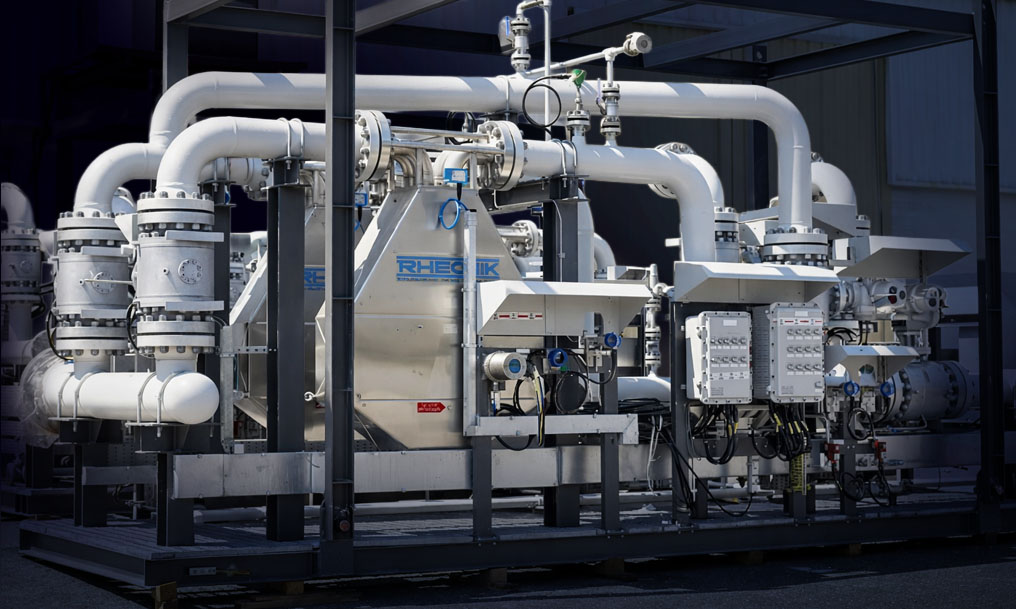
In many industrial process environments, Coriolis mass flow meters are installed in systems where mechanical vibration, cyclic loading and high operating pressures are routine rather than exceptional.
Coriolis mass flow meters are widely selected for their ability to measure true mass flow, density and temperature within a single instrument. In oil and gas, chemical processing, power generation and other heavy industrial sectors, they are frequently mounted on rigid pipework connected to pumps, compressors and rotating equipment.
In these environments, external vibration can be transmitted directly into the instrument body through the pipe supports. At the same time, the meter itself operates by inducing oscillation within its measurement tubes. The interaction between external mechanical movement and the sensor’s own oscillation behaviour is therefore an important consideration during specification.
While accuracy, pressure rating and material compatibility are typically evaluated carefully, the way a Coriolis sensor responds to plant vibration and mechanical stress is not always given the same level of attention. Over time, this interaction can influence measurement stability, installation requirements and overall lifecycle performance.
How does plant vibration affect Coriolis mass flow measurement stability?
Understanding vibration interaction with oscillating measurement tubes
Coriolis mass flow meters operate by inducing controlled oscillation within one or more measurement tubes. As fluid passes through the vibrating tube, Coriolis forces create a measurable phase shift that is proportional to mass flow.
In stable laboratory conditions, this oscillation occurs within a tightly defined frequency range. However, industrial installations rarely resemble laboratory environments. Pumps, compressors and rotating equipment generate cyclic mechanical energy that can be transmitted through pipework into the instrument body. Structural vibration from skid frames or supporting steelwork may also contribute to dynamic loading.
When external vibration frequencies interact with the sensor’s natural oscillation behaviour, the result can influence signal stability. Depending on installation conditions, this interaction may present as measurement noise, the need for additional signal filtering, or increased mechanical stress within the oscillating structure.
For this reason, plant vibration is not merely an installation detail. It is a mechanical factor that can influence long-term stability, particularly in high-pressure or high-rigidity systems where mechanical coupling between pipework and instrument is strong.
Common specification oversights in high-vibration environments
When specifying Coriolis mass flow meters, attention is often concentrated on published accuracy figures, pressure ratings and wetted materials. These are clearly critical parameters. However, the mechanical behaviour of the sensor itself is not always evaluated in equal depth.
One common assumption is that all Coriolis meters respond similarly to external vibration. In reality, sensor geometry and oscillation mode can influence how mechanical energy is absorbed, transmitted or damped within the measuring structure.
In high-pressure systems with rigid pipe supports, mechanical coupling between the process line and the instrument can be significant. If oscillation behaviour and external vibration frequencies interact unfavourably, additional installation measures may be required, such as enhanced pipe support, vibration isolation or signal conditioning.
Another oversight is treating secondary pressure containment as a universal requirement rather than a design-dependent consideration. Some Coriolis sensor designs incorporate secondary housings as part of their containment philosophy, particularly in higher-pressure duties. Understanding why this may be necessary in certain configurations is part of responsible specification.
For engineers working in vibration-prone environments, evaluating oscillation behaviour alongside accuracy and pressure capability can improve long-term measurement stability and reduce the likelihood of unexpected installation constraints.
Why oscillation mode and sensor geometry matter
Although all Coriolis meters use tube oscillation to derive mass flow, the way that oscillation is generated and controlled can differ by sensor design. In simple terms, some sensors rely primarily on bending motion within the measuring tubes, while others use a rotary or torsional oscillation mode.
From a mechanical perspective, the oscillation mode influences how external vibration is coupled into the sensor structure, and how internal stresses are distributed during normal operation. In vibration-prone installations, this can affect measurement stability and the extent of installation measures required to achieve consistent results.
One approach is Rheonik’s Omega-tube design, which uses torsional movement rather than bending motion. Rheonik documentation states that this torsional oscillation has very little effect from external vibration and includes design elements intended to reduce susceptibility to external vibration.
Rheonik also describes a mechanical intent to minimise stress on the measurement tubing. In their published descriptions, torsion rods minimise stress on the tubing, and the oscillation movement is spread in a torsional moment, minimising stress and supporting long-term sensor stability. Rheonik further states that rotary oscillation motion eliminates the bending forces created by other designs.
In high-pressure duties, containment philosophy is another practical consideration. Rheonik documentation states that the Omega-tube’s torsional movement allows heavier wall thickness, and that there is no requirement for secondary pressure containment housings on Rheonik meters because the internal tubing wall thickness is at least equal to the connected pipework. This is presented as a design outcome of the Omega-tube construction rather than an installation add-on.
Range considerations for Coriolis measurement in diverse applications
Coriolis mass flow meters are offered in a broad range of sizes, flow capacities and connection types to match different process duties. In industrial metering, small bore sensors can be used for precise dosing and low-flow measurement, while larger sensors are employed for bulk transfer, custody transfer and high-volume process control.
Manufacturers provide options across a wide range of flow capacities, with corresponding variations in pressure ratings, wetted materials and output interfaces. The appropriate choice depends on the specific flow rate, line size, pressure and media characteristics encountered in each application.
Selecting a range that aligns with the mechanical and thermodynamic conditions of a process, including expected vibration profiles, is as important as matching published flow and accuracy specifications. This helps ensure that the installed meter functions reliably within its intended service envelope and that installation constraints are understood at the outset.
Engineering review and application guidance
Selecting Coriolis mass flow meters for vibration-prone or high-pressure environments requires more than matching flow rate and line size. Understanding pipe support conditions, expected vibration frequencies and mechanical coupling into the instrument body can materially influence long-term performance.
As an independent, engineering-led supplier, Able supports customers in reviewing these installation factors during specification. This includes assessing whether torsional or bending-based sensor designs are more appropriate for the duty, and identifying any additional installation measures that may be required.
Further information on available Rheonik Coriolis mass flow meter solutions can be found on the Able website, alongside guidance covering broader Coriolis mass flow meters selection considerations.
Application discussions can be supported from early specification through commissioning and long-term lifecycle maintenance.
Frequently asked questions (FAQs)
Do all Coriolis meters require secondary pressure containment in high-pressure applications?
Not necessarily. Secondary containment philosophy depends on sensor design and construction. Some designs incorporate secondary housings as part of their containment strategy, particularly in higher-pressure duties. Rheonik documentation states that its Omega-tube construction allows heavier wall thickness and does not require secondary pressure containment housings because the internal tubing wall thickness is at least equal to the connected pipework. Specification should always consider pressure rating, installation conditions and applicable standards.
For engineers reviewing installation stability or vibration-sensitive applications, a detailed technical discussion at specification stage can prevent unnecessary installation constraints later.
If you are reviewing the stability of your Coriolis mass flow measurement in vibration-prone or high-pressure environments, Able can help assess whether your current specification and installation approach are aligned with long-term mechanical and operational requirements.
Explore the range: Coriolis mass flow meters
Email: [email protected]
Telephone: +44 (0)1189 311 188

Share this with
X Facebook LinkedIn Email