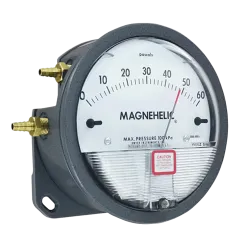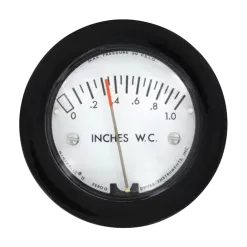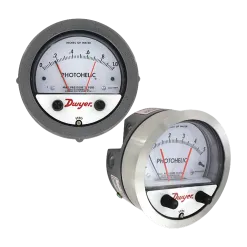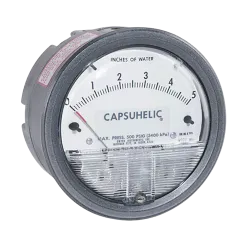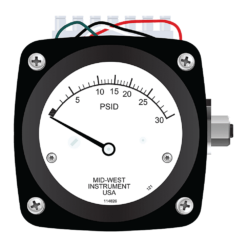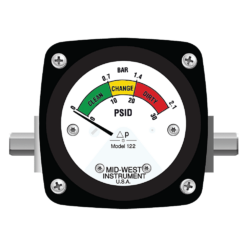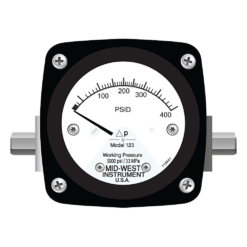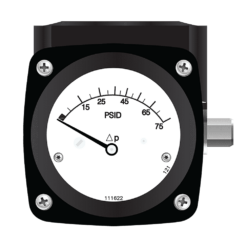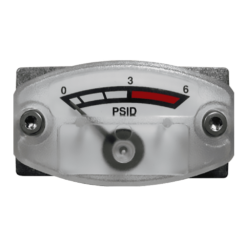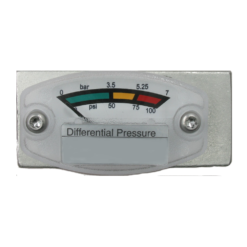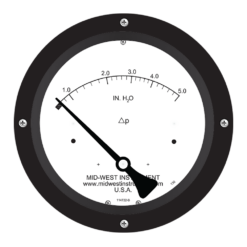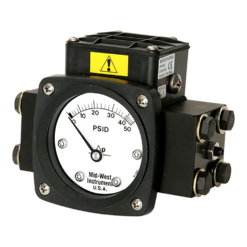
Differential Pressure Gauges
Differential Pressure Gauges for HVAC and Process Applications
Able Instruments supply differential pressure gauges for comparing pressure between two points in a system. The range supports low-pressure air and gas duties such as filter loading, duct, fan and room-pressure monitoring, together with suitable process and compatible-liquid applications.
Selection depends on the required differential-pressure range, maximum static or system pressure, medium and wetted-material compatibility, indication or switching function, and the preferred dial and mounting arrangement. Able can help compare Dwyer and Mid-West Instrument options for the application.
Quick Select by Requirement
Why Choose Differential Pressure Gauges?
A differential pressure gauge shows the difference between two pressure points rather than the pressure at a single connection. It gives operators and maintenance teams a direct local indication of changing system conditions without having to compare two separate pressure readings.
This makes the technology useful for identifying filter or strainer loading, checking fan and blower performance, maintaining pressure relationships between rooms or building areas, and monitoring pressure drop across compatible process equipment.
When Differential Pressure Gauges Are a Strong Fit
Differential pressure gauges are a strong fit where a clear local reading supports routine inspection, commissioning or maintenance. Compact air and gas gauges suit many HVAC, filter and cleanroom duties, while suitably constructed bellows, piston or diaphragm instruments can support compatible liquid, high line-pressure and wider process applications. Closed-tank level duties may also be possible when the instrument, range and wetted materials are selected for the service.
Key Considerations Before Specifying
The correct instrument depends on the measurement duty and the pressure conditions on both sides of the gauge. Establish these points before selecting a family or model.
- Differential-pressure range: Confirm the minimum, normal and maximum differential pressure, preferred units and whether a positive, negative or zero-centre scale is required.
- Static or system pressure: Check the maximum pressure that can be applied to either connection, even when the measured differential pressure is small.
- Medium and materials: Establish whether the service is air, compatible gas or liquid, then verify the body, wetted materials, seals, connections and temperature limits.
- Indication or switching: Decide whether local mechanical indication is sufficient or whether adjustable switching is required for an alarm or compatible external control circuit. Do not assume every gauge provides an electrical output.
- Form factor and installation: Consider dial size, readability, mounting orientation, panel or surface mounting, pressure connections and access for zero adjustment or maintenance.
Dwyer and Mid-West Instrument Ranges
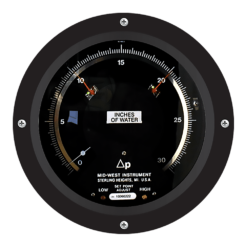
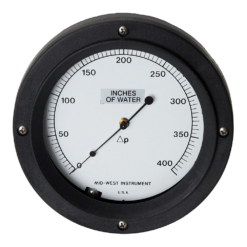
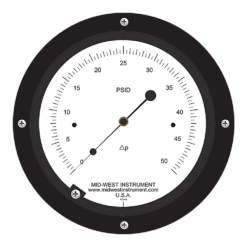
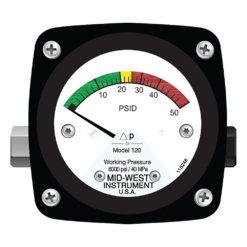
The product grid combines Dwyer and Mid-West Instrument differential pressure gauges. Dwyer families cover conventional low-pressure indication, compact installations, combined switch/gauge duties and elevated static or system pressure applications. The Mid-West range extends selection across bellows, piston and diaphragm designs for a wider variety of differential-pressure and process conditions.
Able Instruments are an official UK channel partner for DwyerOmega. The existing Mid-West Instrument range remains part of this category, allowing selection to be based on the application, required construction and operating conditions rather than supplier alone.
Differential Pressure Gauge Support
Able Instruments can help match a differential pressure gauge to the required range, medium, pressure conditions, function and installation.
- Application qualification: Clarifying the measurement duty, operating conditions and information the user needs from the instrument.
- Range and pressure: Guidance on differential-pressure range, engineering units and maximum static or system pressure.
- Media and construction: Support checking air, gas or liquid service against wetted materials, seals, connections and temperature limits.
- Function and installation: Help comparing indication-only and switch/gauge options, dial size, mounting and relevant product documentation.
Differential Pressure Gauges – Frequently Asked Questions
What does a differential pressure gauge measure?
A differential pressure gauge indicates the difference between two pressure points in a system. It is used to show pressure drop, pressure relationships or another defined differential-pressure condition, rather than ordinary pressure at one connection.
How do I choose the right differential pressure gauge?
Confirm the required range and units, maximum static or system pressure, medium, temperature, wetted-material compatibility, indication or switching requirement, process connections and mounting arrangement. These factors determine the appropriate family and model.
Can every gauge in this category be used with liquids?
No. Some gauges are intended for air and compatible gases, while other models can be specified for compatible liquids. Confirm the body, wetted materials, seals, connections, temperature and line-pressure rating for the selected medium.
Do all differential pressure gauges provide switching?
No. Many products provide mechanical local indication only. The Dwyer Photohelic family combines indication with two adjustable switching setpoints, and selected Mid-West configurations also offer switching. Confirm the required output and electrical rating before selection.
What is the difference between a differential pressure gauge and a differential pressure flow meter?
A differential pressure gauge directly indicates pressure difference. A differential pressure flow meter uses a measured pressure differential with a suitable primary element or sensing arrangement to determine flow. Use the separate Differential Pressure Flow Meters category for that requirement.
+ Learn More