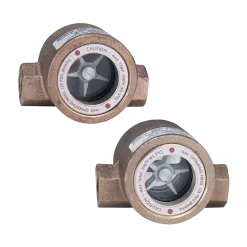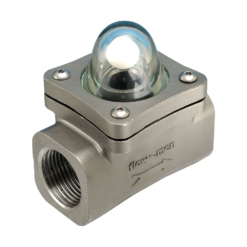
Sight Flow Indicators and Sight Windows
Visual Flow Confirmation for Process Lines
Able Instruments supply sight flow indicators and in-line sight windows for direct local observation of fluid movement or condition in process pipework. These passive devices provide visual confirmation rather than a calibrated flow-rate measurement, electrical switch signal, transmitted output or automatic control function.
Selection depends on the medium, line size and connection, body and wetted materials, operating pressure and temperature, installation orientation and preferred viewing method. The range includes Flow-Mon ball and spinner indicators together with Dwyer windowed, flanged and full-view SFI configurations.
Quick Select by Requirement
- Flow-Mon ball-type indicators: compare by connection size in the product grid
- Flow-Mon spinner-type indicators: compare by connection size in the product grid
- Windowed impeller, flapper or clear-view indication
- Flanged process-line viewing
- Full-view tube or 360-degree observation
Why Choose a Sight Flow Indicator?
A sight flow indicator gives an operator an immediate local visual check without requiring an electrical supply or remote display. Depending on the selected design, it can show movement through an internal indicator or provide a direct view of the process medium.
These devices are useful when visual confirmation is sufficient. They are not a substitute for a calibrated flow meter, flow switch, transmitter or controller where the process requires a measured value, alarm, interlock or automatic response.
When Sight Flow Indicators Are a Strong Fit
Sight flow indicators suit process lines where an operator needs a simple local check of fluid movement, presence or visible condition. Ball, spinner, impeller and flapper designs make movement easier to recognise, while clear-view windows and full-view tubes allow more direct observation. The correct route depends on the medium and the mechanical and operating requirements of the installation.
Key Considerations Before Specifying
Confirm the process and installation conditions before choosing an indication style or product family.
- Medium compatibility: Identify the liquid or gas and verify all body, window, tube, seal and other wetted materials.
- Line size and connection: Confirm the pipe size and whether the installation requires a threaded or flanged connection.
- Viewing method: Choose between ball, spinner, impeller, flapper, clear-view or full-view tube indication according to the required visibility.
- Pressure and temperature: Check the operating and maximum conditions against the selected model and materials.
- Orientation and access: Verify permitted mounting orientation, viewing direction and access for inspection or maintenance.
- Required function: Confirm that passive local indication is sufficient. Use a separate flow meter, switch or transmitter where measurement or an electrical signal is required.
Flow-Mon and Dwyer Sight Flow Ranges
The existing Flow-Mon range provides ball-type and spinner-type visual indication across a size-led selection of threaded products. The Dwyer SFI-100/300/300F/400/700 family adds single-window, double-window, flanged and full-view arrangements with impeller, flapper, clear-view or tube-based observation options.
Able Instruments are an official UK channel partner for DwyerOmega. Able can help compare Flow-Mon and Dwyer routes by medium, connection, materials, operating limits and viewing requirement.
For viewing inside a vessel, tank or process enclosure rather than an in-line pipe, use the Industrial Sight Glasses category. For electrical flow or no-flow detection, use Flow Switches / Indicators.
Sight Flow Indicator Selection Support
Able Instruments can help match a sight flow indicator or in-line sight window to the process medium, operating conditions and required viewing method.
- Application qualification: Clarifying the medium, observation requirement and whether passive local indication is sufficient.
- Product route: Guidance comparing ball, spinner, windowed, flanged and full-view configurations.
- Materials and limits: Support checking wetted materials, seals, pressure, temperature, line size and connection.
- Installation and documentation: Help confirming mounting orientation, viewing access and the information needed for specification.
Sight Flow Indicators and Sight Windows: Frequently Asked Questions
What is a sight flow indicator?
A sight flow indicator is installed in a process line to give a direct local view of fluid movement or condition. Depending on the design, movement may be shown by a ball, spinner, impeller or flapper, or observed directly through a clear-view window or tube.
Does a sight flow indicator measure flow rate?
Not necessarily. The products in this category provide local visual indication and should not be treated as calibrated flow meters. Use a suitable flow meter when a measured flow-rate value is required.
Can sight flow indicators be used with both liquids and gases?
Selected products can be used with compatible liquids or gases, but suitability is model dependent. Confirm the medium, body and wetted materials, seals, pressure, temperature, connection and installation orientation before selection.
What is the difference between an in-line sight window and a vessel sight glass?
An in-line sight window or sight flow indicator is installed in pipework to observe flow or process-fluid condition. A vessel sight glass is used to view inside a tank, vessel or process enclosure. Able lists vessel and tank viewing products separately under Industrial Sight Glasses.
When do I need a flow switch instead of a visual indicator?
Choose a flow switch when the system needs an electrical flow or no-flow signal for an alarm, interlock or control function. A passive sight flow indicator provides local visual confirmation only and does not provide automatic detection or an electrical output.
+ Learn More