
Orbit Fab
ABLE Awarded Orders | Thursday, 22nd October Share
Customer: Orbit Fab
Project: Xenon Propellant Flow Metering
Location: Harwell Campus, Oxfordshire
Products: Coriolis Flow Meters
Founded in 2018, Orbit Fab aims to move spacecraft beyond single-use operation by making in-space refuelling a reality. Traditionally, spacecraft have been restricted to the fuel carried at launch, limiting their operational flexibility and service life while contributing to long-term challenges in the space environment.
Orbit Fab has resupplied water to the International Space Station, launched the first commercial fuel depot into low Earth orbit (LEO), and secured the first commercial and US Government agreements for in-space fuel delivery services.
Central to its approach is RAFTI, a cooperative docking and refuelling interface that has become an industry standard. Available under an open licence and rated at Technology Readiness Level 8 (TRL 8), RAFTI replaces a spacecraft’s conventional fill-and-drain valve, enabling refuelling both on the ground and in orbit.
Xenon is used as a propellant in satellites and spacecraft, particularly in ion thrusters and Hall-effect thrusters. Unlike conventional rocket fuel, xenon does not burn. Instead, electrical power, usually supplied by solar panels, is used to ionise the gas, producing charged particles that are accelerated out of the thruster to generate thrust.
Xenon is particularly well suited to this process because its heavy atoms help transfer momentum to the spacecraft and are relatively easy to ionise. Its chemically inert nature also simplifies handling.
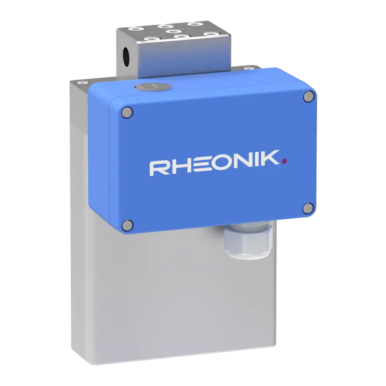
Able has supplied Rheonik Coriolis mass flow meters to Orbit Fab to monitor xenon flow, supporting the company’s work in spacecraft refuelling.
Coriolis technology is particularly well suited to this application because it measures mass flow directly. With gas volume changing according to pressure and temperature, direct mass measurement provides a clear basis for determining how much xenon passes through the system.
For a specialist spacecraft propellant, accurate measurement supports both process monitoring and careful management of the quantities transferred. By integrating mass flow over time, the system can also establish the total mass delivered during a transfer – valuable information when accounting for propellant.

Share this with
X Facebook LinkedIn Email