Understanding the pressure and temperature limits of Coriolis mass flow meters
Announcements | Wednesday, 4th March Share
In extreme-duty applications, the practical limits of Coriolis mass flow meters are often defined by mechanical operating envelope rather than measurement accuracy.
Coriolis mass flow meters are widely selected for their ability to measure true mass flow, density and temperature within a single instrument. In many industrial installations, however, the first question is not whether Coriolis can measure accurately, but whether a meter can operate safely and reliably within the system’s pressure and temperature limits.
This is particularly relevant in high-pressure gas systems, cryogenic processes, hydrogen refuelling infrastructure and extreme chemical duties. In these environments, understanding pressure rating and temperature capability at specification stage helps avoid misapplication, redesign and long-term reliability issues.
What determines pressure limits in Coriolis mass flow meters?
Pressure rating is a structural constraint, not a measurement constraint
Coriolis mass flow meters measure mass flow using a vibrating sensor and a phase shift signal derived from fluid movement, but pressure capability is fundamentally governed by mechanical design and structural safety factors.
Pressure limits are influenced by tube wall thickness, material strength, end connection design, weld integrity, stress distribution under internal pressure and the safety factors applied during design and certification. At elevated pressures, the sensor must withstand significant internal stress without compromising long-term structural integrity.
In modern gas applications, pressures can exceed those typically encountered in general process systems. Hydrogen refuelling infrastructure is a clear example, where operating pressures commonly exceed 700 bar. In these duties, pressure rating is not a secondary specification. It is central to suitability.
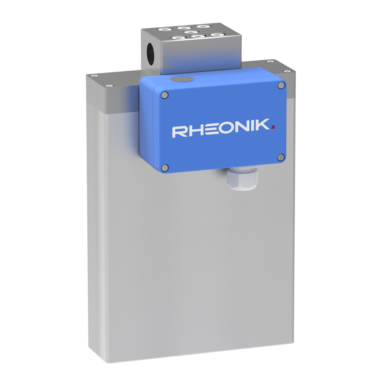
Within Able’s Coriolis mass flow meters range, Rheonik RHM series models are available with pressure ratings up to 1722 bar, supporting deployment in very high-pressure gas and liquid applications where lower-rated instruments may not be appropriate.
How do temperature extremes affect Coriolis mass flow meter suitability?
Cryogenic and high-temperature processes introduce different material considerations
Temperature capability introduces additional engineering constraints. At cryogenic temperatures, material contraction and shifts in mechanical properties must be considered. At elevated temperatures, changes in strength, thermal expansion and long-term material behaviour can become limiting factors.
Key considerations include material compatibility across the full temperature range, integrity of welded joints, sealing approach, and alignment with relevant certification requirements for the installed environment.
Rheonik RHM series models are available for process temperatures from −260 °C to +400 °C, supporting selection for both cryogenic and high-temperature process duties where Coriolis mass flow measurement is required.
High-pressure applications: hydrogen and gas compression
Why hydrogen duties place exceptional demands on high-pressure mass flow measurement
Hydrogen infrastructure is one of the most mechanically demanding modern flow applications. Hydrogen filling stations and associated compression systems routinely operate at pressures above 700 bar. Instruments used in these systems must be engineered for sustained high-pressure service while maintaining stable mass flow measurement.
Rheonik Coriolis meters are used in hydrogen processes, including high-pressure applications. Able’s hydrogen application story provides an example reference for this use case:
Use of Rheonik products in hydrogen processes (PDF)
In practical terms, high-pressure hydrogen duties often require strong structural integrity, stable performance under mechanical stress, material suitability for hydrogen service and durability in cyclic pressure environments. Correct specification starts with confirmation of the full operating envelope, not simply nominal flow range.
Why operating limits vary between Coriolis mass flow meter designs
Operating envelope depends on structural design and certification scope
Operating envelope differences typically result from structural design choices and certification scope rather than the measurement principle itself.
Factors influencing limits include tube wall thickness and material selection, end connection and weld design, pressure class requirements, temperature range certification and the intended extreme-duty operating envelope.
Some Coriolis platforms are optimised for general process applications across a broad installed base. Others are engineered specifically to address applications involving high mechanical stress, aggressive media or elevated pressures. Understanding this distinction early helps reduce risk and avoids unexpected installation constraints later in the project lifecycle.
When extreme capability becomes critical
Extreme pressure and temperature capability is particularly relevant in hydrogen refuelling and compression, specialty chemicals, high-pressure test systems and cryogenic gas handling. In these environments, a meter’s structural rating can determine whether Coriolis mass flow technology is viable at all.
Engineering review and application guidance
Selecting a Coriolis mass flow meter for extreme-duty service should begin with maximum operating pressure, maximum and minimum temperature, media characteristics, hazardous area classification, required certification and installation constraints. A specification review that considers the full operating envelope reduces the likelihood of misapplication and improves long-term reliability.
In installations where both extreme operating conditions and mechanical vibration may be present, the interaction between pipework movement and the oscillating measurement tubes can also influence measurement stability.
Further discussion on this topic can be found in our engineering overview explaining how plant vibration affects Coriolis mass flow measurement stability.
As the UK representative for Rheonik, Able supports engineers from early specification through commissioning and lifecycle support, ensuring pressure and temperature limits are properly evaluated within the wider process context.
Frequently asked questions (FAQs)
What is the maximum pressure a Coriolis mass flow meter can handle?
Pressure ratings vary by design and model. Some Coriolis mass flow meters are rated for moderate industrial pressures, while specialist models such as certain Rheonik RHM variants are available up to 1722 bar. Always confirm the certified pressure rating for the specific configuration and connection standard.
Can Coriolis mass flow meters operate at cryogenic temperatures?
Yes, provided the design and materials are suitable for cryogenic duty. Some models are engineered to operate down to −260 °C. Material behaviour, sealing approach and certification alignment should be verified for the specific application.
Are Coriolis mass flow meters suitable for hydrogen filling stations?
Hydrogen refuelling systems typically operate above 700 bar and require instruments designed for sustained high-pressure service. Coriolis mass flow meters with appropriate pressure ratings and approvals can be used in hydrogen applications where correctly specified against the full operating envelope.
If you are reviewing a high-pressure, cryogenic or hydrogen application and need to confirm Coriolis suitability, Able can help assess specification and operating envelope alignment before equipment selection is finalised.
Explore the range: Coriolis mass flow meters
Email: [email protected]
Telephone: +44 (0)118 931 1188

Share this with
X Facebook LinkedIn Email